From Backlog to Breakthrough, Reducing 43 Percent of Legacy Claims
May 5, 2026
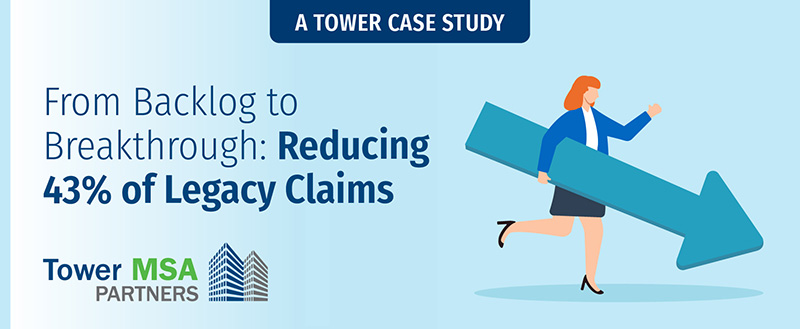
A large payer came to Tower MSA Partners with a backlog of legacy claims that had stalled for months, and in some cases years. These claims included outdated medical records, unclear treatment histories, and MSAs that had never been reviewed for accuracy. Through structured medical review and focused cleanup, Tower helped the payer resolve 43% of these legacy claims. This case reflects a broader trend in workers’ compensation, where successful legacy claim resolution depends on accurate clinical validation and updated MSA preparation.
Why Legacy Claims Stall
Legacy claims don’t linger because they are unsolvable, they stall because the underlying data is no longer accurate.
In this case:
- Treatment histories no longer reflected current care
- Medications included in MSAs had long been discontinued
- Medical projections were based on outdated assumptions
- Files had not been clinically reviewed in years
These issues led to inflated exposure, unclear settlement positions, and hesitation from all parties involved.
Turning Aging Files into Actionable Claims
Tower MSA Partners implemented a structured review process focused on clinical accuracy and defensibility.
Each claim was evaluated to:
- Remove discontinued or unnecessary medications
- Correct or eliminate outdated treatment projections
- Align medical records with current care status
- Rebuild MSAs based on actual medical necessity
Tower’s clinical team actively reconciles treatment patterns against real-world care. This ensures allocations reflect what is actually happening—not what was assumed years ago.
The result: MSAs that are accurate, defensible, and ready to support settlement.
How Collaboration Supports Legacy Claim Settlement
Updating the MSA alone is not enough—claims move when all stakeholders are aligned.
Tower worked closely with the claims team to clearly document and explain each change, giving adjusters confidence in the updated exposure. In parallel, structured settlement and professional administration partners were introduced to address claimant concerns about future medical care.
This combination helped:
- Reduce claimant resistance
- Eliminate uncertainty around future treatment funding
- Create cleaner, more predictable submissions to CMS
Files that had been stagnant for years were now positioned for resolution.
Why Legacy Claim Resolution Makes a Difference
Without clinical validation, MSAs drift away from reality over time. They become inflated, difficult to defend, and harder to settle.
Tower’s approach restores alignment between medical documentation and actual care by:
- Verifying current treatment status
- Eliminating unsupported projections
- Ensuring compliance with CMS expectations
This transforms legacy claims from uncertain liabilities into actionable settlement opportunities.
Results That Reflect Expertise
Through a focused legacy claim strategy:
- 43% of legacy claims were resolved
- Previously stalled files became settlement-ready
- MSAs were updated to reflect current medical reality
- Submissions were supported by clear, defensible documentation
What This Means for Payers
If you have claims that have not moved in years, there is a strong likelihood they are being driven by outdated medical assumptions—not true exposure.
Correcting those assumptions can unlock significant progress without increasing settlement spend.
Ready to Move Your Legacy Claims?
Tower MSA Partners helps payers reduce backlogs, improve MSA accuracy, and accelerate settlements through clinical intervention and disciplined review.
If you’re carrying aging claims that continue to stall, it may be time to reassess what’s driving them.
Contact our team or connect with Hany Abdelsayed, Executive Vice President, Strategic Services, at hany.abdelsayed@towermsa.com to discuss your legacy claim strategy.
Frequently Asked Questions
What is legacy claim resolution?
Legacy claim resolution is the process of reviewing long-standing or stalled claims to correct outdated medical projections and prepare accurate MSAs that support settlement.
Why do legacy claims stall?
They often include outdated treatments, discontinued medications, and unclear medical histories that make MSAs inaccurate or inflated.
How does Tower reduce legacy claim backlogs?
Tower updates records, verifies treatment plans, corrects pharmacy projections, and prepares accurate MSAs supported by current documentation.
Does CMS accept updated MSAs on old claims?
Yes. CMS accepts updated allocations when the documentation accurately reflects the claimant’s current medical needs.
How long does legacy claim resolution typically take?
The timeline depends on the condition of the claim files and the level of medical review required. Many legacy claims can move toward settlement within weeks once records are updated and MSAs are corrected to reflect current medical needs.