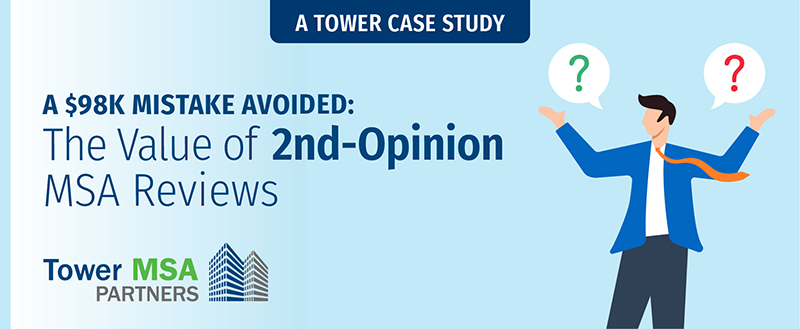
In Tower MSA Partners’ previous post, we explained how Physician Peer Review generated more than one million dollars in savings while strengthening CMS compliance. This month, we shift focus to the importance of accuracy. Tower MSA Partners was asked to review a Medicare Set Aside allocation prepared by another company, and the findings revealed a significant error that would have cost the payer ninety eight thousand dollars. This case illustrates why a second opinion is a valuable safeguard in every MSA strategy.
Identifying the Problem
The claim involved ongoing treatment, therapy, and pharmacy exposure. The original MSA prepared by another vendor appeared complete, and the projected costs seemed typical for this type of injury. Once Tower MSA Partners reviewed the file, the clinical team found inconsistencies that required deeper investigation. Several treatment projections did not align with the documented medical record. The file also listed duplicate items and outdated medications that had already been removed from the claimant’s regimen. The largest issue involved a discontinued high-cost prescription that remained in the allocation. This error inflated the MSA by nearly one hundred thousand dollars and created unnecessary CMS risk. If submitted as written, the payer would have funded care that no longer existed and faced questions about clinical justification.
The Second Opinion Solution
Tower MSA Partners completed a complete second opinion MSA review. Analysts verified each treatment recommendation and cross-referenced records with the most current documentation. Pharmacy history was compared to recent physician notes to ensure accuracy. The discontinued medication was the key discrepancy. The treating physician had replaced it with a lower cost, safer alternative, and the original reviewer failed to revise the allocation. Tower updated the MSA to reflect the correct medication plan and documented the clinical reasoning in clear, concise terms. With the correction in place, the projected cost of the MSA decreased by ninety-eight thousand dollars while maintaining complete alignment with CMS guidance.
Collaboration and Communication
Tower MSA Partners emphasizes transparency in every step of the review. The clinical team explained each correction and helped the claims professional understand why the original allocation was inaccurate. This clarity supported confident decision making and prepared the file for CMS submission. Tower also communicated updates with the defense attorney and treating provider, so all parties understood the medical basis for the revisions. When submitted to CMS, the revised MSA was approved without development requests. Accurate documentation and clinical alignment created a predictable approval process.
Why Oversight Makes the Difference
Accuracy is essential in Medicare Set Aside management. Even a small oversight can inflate lifetime medical projections and expose the payer to avoidable costs. A second opinion MSA review provides an essential layer of validation that confirms medical necessity, eliminates outdated information, and protects the overall integrity of the claim. This case demonstrates that clinical oversight and cost savings work together. Correcting the allocation not only protected the payer from unnecessary spending but also ensured that the file met CMS expectations with confidence.
Lessons Learned
- A second opinion review prevents costly mistakes and confirms accuracy before submission.
- Outdated information leads to inflated costs, especially in pharmacy heavy claims.
- Strong clinical documentation makes CMS approval predictable and efficient.
- Precision drives savings. The ninety-eight-thousand-dollar reduction resulted from careful review and experienced analysis.
Results That Reflect Expertise
By requesting a second opinion, the payer avoided a ninety-eight thousand-dollar over allocation and gained a compliant, defensible Medicare Set Aside. The corrected review reflected actual medical necessity and prevented unnecessary long-term funding. This case highlights Tower MSA Partners’ continued commitment to accuracy, clinical alignment, and cost containment. A second opinion review is more than a quality check. It is an essential safeguard for payers, claimants, and settlements.
FAQs
A second opinion review evaluates an MSA prepared by another company to confirm accuracy, clinical validity, and compliance with CMS guidelines.
They uncover outdated treatments, discontinued prescriptions, and projection errors that inflate total costs.
Any claim with complex medical history, high pharmacy exposure, or uncertainty about the accuracy of an existing MSA benefits from a second opinion.